by Neil Krug
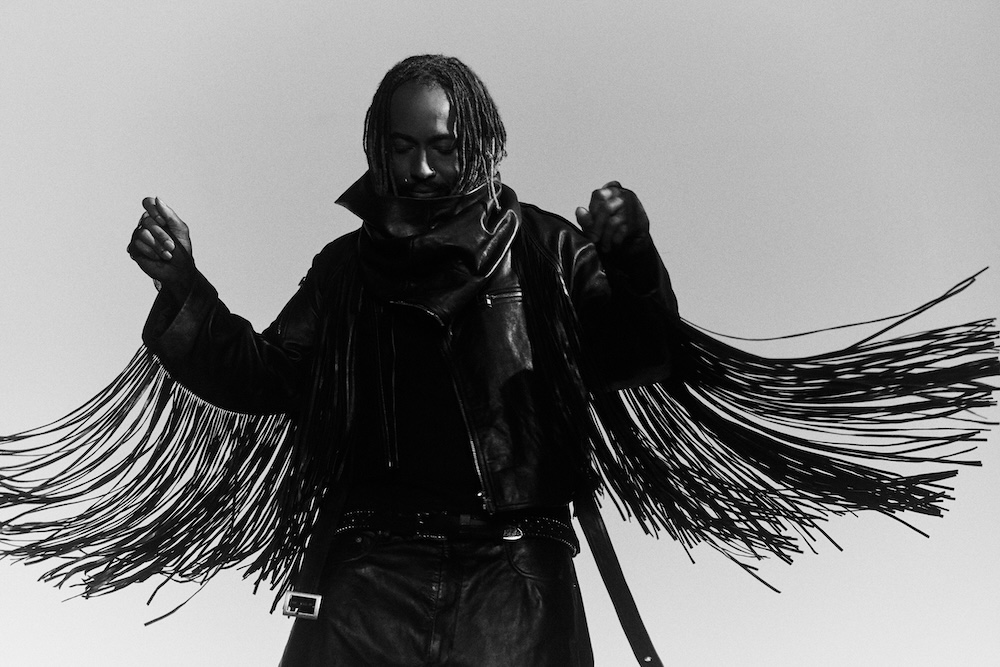
After the sudden death of hip-hop troubadour Mac Miller in 2018, the singer, songwriter, bassist and producer Thundercat released It Is What It Is, a 2020 album heavily influenced by the loss of his celebrated friend and collaborator Miller. Six years later comes Thundercat’s follow-up, Distracted, an album that feels like returning to everyday chaos when the mourning never really stopped.
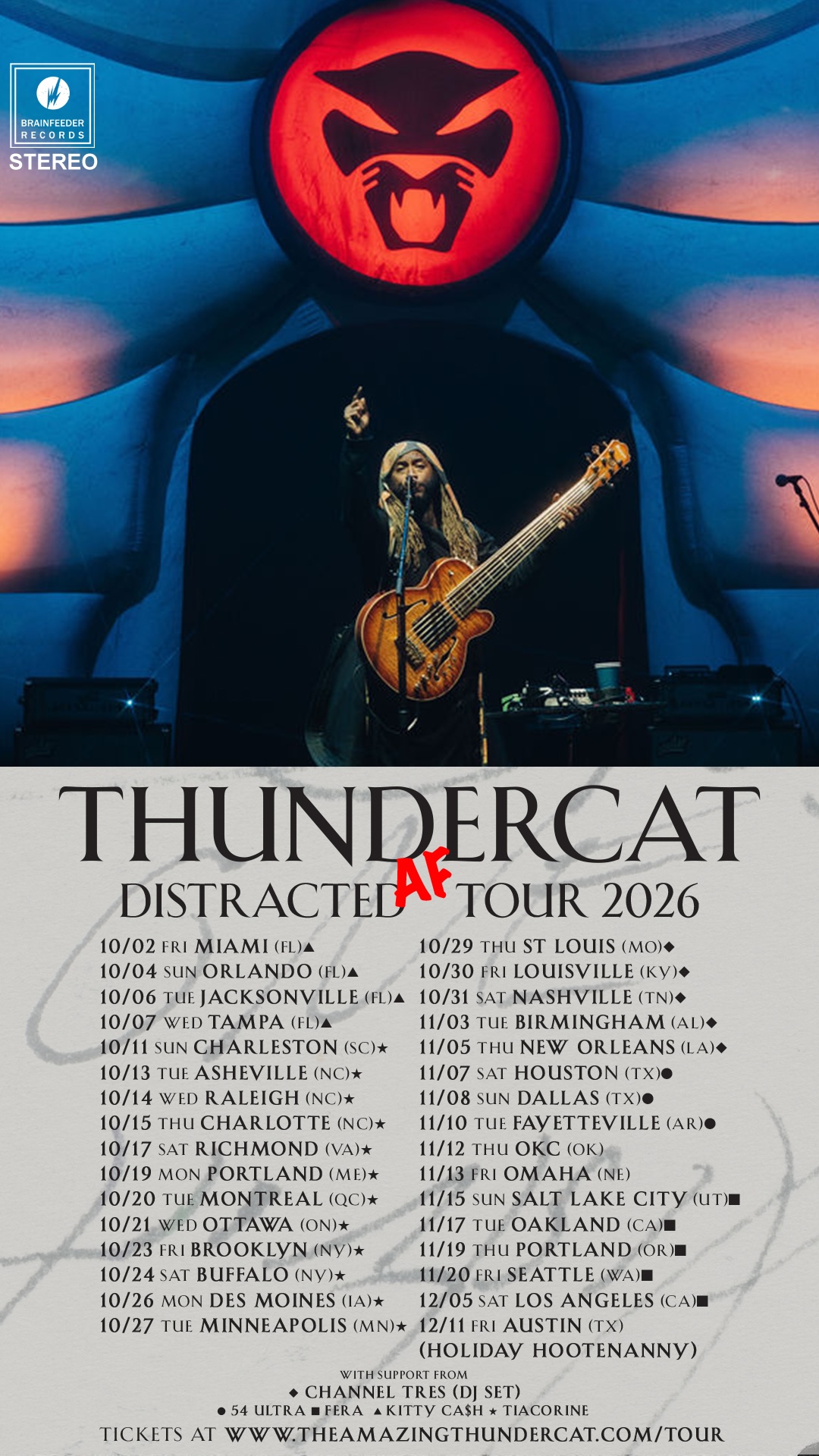
Distracted includes a previously unreleased track with Miller, “She Knows Too Much,” which Thundercat describes almost as a keepsake more than a song ever intended for an album. “I would listen to it very often and I couldn’t help but smile at the picture it painted of me and Mac, and who we really were,” he says in a Zoom call with PureHoney from the road, ahead of his October 2 concert at Miami Beach Bandshell.
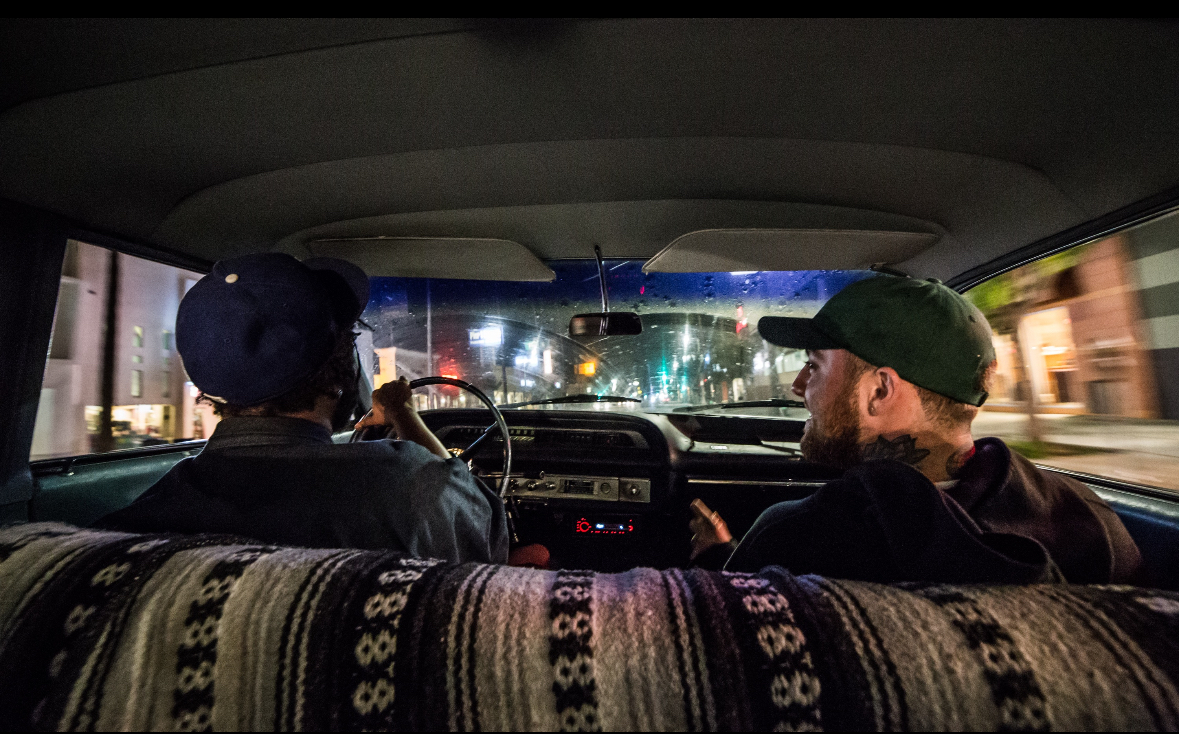
 “She Knows Too Much” is a genial mix of West Coast bounce and chill, Miller trading breezy raps and singsong couplets with Thundercat about an idealized woman “way out of my league.” It’s just one the versatile pairings that pop up all over Distracted — from Tame Impala, Lil Yachty, A$AP Rocky, Willow and The Lemon Twigs, all testifying to Thundercat’s willingness to push through boundaries in search of what he hears in his head. “I like being challenged,” he says, “especially when it comes to things like pop culture.”
From anchoring the rhythm section with his drummer brother on tour for punk legends Suicidal Tendencies, Thundercat went on to receive Grammy Album of the Year nominations for his work with hip-hop visionary Kendrick Lamar and r&b-soul revivalist H.E.R., and won Grammys of his own including Best Progressive R&B Album in 2021 for the aforementioned It Is What It Is.
Born Stephen Bruner in Los Angeles, the son of a drummer for The Temptations and The Supremes, Thundercat grew up learning how to sit with rhythm and play with intention in different musical settings. He flirted with becoming an illustrator — “Absolutely not!” he says with a laugh, recalling his dad’s reaction to his teen-aged son’s interest in a visual arts career.
He released his solo debut, The Golden Age of Apocalypse, in 2011 and may be best known for 2015’s “Them Changes,” a funky banger about heartbreak that kept bouncing back thanks to an Ariana Grande cover in 2018 and then as the soundtrack to a viral TikTok dance craze in 2020.
The song is not an outlier in Thundercat’s very unique approach to melody, harmony and groove. It has kinship to Distracted tracks such as “Funny Friends,” an eloquent balance of jazz chords, tight drums and hypnotic synth with a smooth A$AP Rocky verse.
“What Is Left to Say,” with The Lemon Twigs, recalls classic Motown and early R&B. And then there’s “Anakin Learns His Fate,” wherein Thundercat takes what sounds like a synthesizer dropped down a stairwell and makes it groove. Later on, “Pozole” feels warm and honest, with a simple arrangement of vocal harmonies and piano. The combination of jazz’s complex melody, funk’s sense of groove and hip-hop’s intimacy makes this album apt for almost any occasion.
Wherever his writing, singing, producing and trademark six-string bass playing lead him, he says, “I think it’s always been somewhat of a question, or a challenge, to not have to compromise on musicianship and try to find a way to put it in there.”
our interview with Thundercat.
 Your albums often have very layered arrangements, while your live band is a trio. How important is it to you, if at all, to recreate what’s on an album in a concert venue?
I’ve always been a live instrumentalist. … For me, it’s always been about being able to play it. … Live is meant to be a different experience than a record, I believe, even if there’s some of the times one can inform the other, or if it was recorded in a certain manner. There’s the person that wants to hear exactly what they heard on the album, but I’m not that person.
This album really shows your capacity for collaboration across styles and genres, and the sheer range of experiences and collaborations that you’ve had. I don’t know that there’s anybody in contemporary music that can say, ‘I’ve worked with Wiz Khalifa and Suicidal Tendencies.’ Has it always been just you following your muse and your curiosity where it leads, with the confidence that you can hang musically with anybody? Or is there something more directed and intentional about how you’ve gone about this?
I’ve always tried to follow my instinct, follow my gut, and how I feel. A lot of the times I put myself in different situations. I like being challenged, especially when it comes to things like pop culture. A lot of the time I think that I just try to follow what feels right to me, to be honest.
It’s led you to interesting places. I watched a clip online of you playing ‘Institutionalized’ at a reunion in 2023 with Suicidal Tendencies at The Greek Theatre in Los Angeles. What was that like after so many years apart?
It felt like I never left … like it was still ingrained in my DNA. I’m still very much a child of that, and Mike and I [Suicidal Tendencies lead singer Mike Muir] laugh about it all the time because the saying is “Suicidal for life,” and it’s kind of true. … I’ve rejoined them on stage a couple of times since, and it just is like, you never forget how to ride a bike.
On the new song, “What Is Left to Say,” with the Lemon Twigs, I felt like I could hear a little bit of Roberta Flack and Donny Hathaway, and almost a Beach Boys air in the harmonizing. You sound to me like someone who grew up on classic terrestrial radio when it was less restricted by format and you could hear a rock song and an r&b song and a pop song on the same station. You seem to hear and write in a way that isn’t locked into any one stylistic or genre tradition.
I did kind of grow up a bit like that, where it’s like the music was the information. … It was very informational the way music was handed down to us through radio and stuff like that. … Every now and again, I get told I’m older than [laughs] — but as one does, I’ve always just tried to apply it to the now.
Was there ever a stage of teen-age rebellion where you said, “Hell no, I’m not following my dad into music?”
I definitely wanted to be an illustrator. I was like, “I wanna draw!” And my dad was like, “Absolutely not!” [laughs] He was like, “You’re gonna be depressed!” I was like, “Oh, yeah? So let me choose a different depression and just play the bass.” I did at one point want to go to Fairfax High: A few of my favorite artists and musicians had gone there, and I was like, “Oh, I can do music and stuff from there, too.” But I also really, really wanted to be in illustration and take that route. It kind of picked up, [but] also it didn’t hurt that you could get paid playing bass. “I can buy Marvel cards now!”
There have been artists and bands that incorporate complex harmony and jazz into popular music, but it feels like that hasn’t been the case for a while —
Yeah.
— and you’ve found a great space where there’s room for that. I don’t know if you thought about it in terms of, “I’m going to make pop music consumers listen to jazz, dammit,” or again, this is just the way you write and think and hear.
I think it’s always been somewhat of a question, or a challenge, to not have to compromise on musicianship and try to find a way to put it in there. I think that’s always the challenge. … Especially with things like streaming, where people need labels and titles and stuff, it just feels a bit dystopian. It is a bit dystopian, the idea that these things are so separate … because they’re pretty normal for musicianship. You know what I mean? I feel like that was a normal functionality of pop culture. … Growing up in the age of hip-hop, where you’ve got all kinds of randomness happening … growing up listening to J Dilla, and realizing J Dilla was doing that, too, realizing Q-Tip was doing that, too. Pete Rock was doing that, too. I’m also very much a child of those things, which also informed the way I would play. Realizing J Dilla was sampling George Duke, knowing the record, and then knowing what Dilla would do, and then watching somebody try to understand that feel. Growing up, it was very much like I had a lot of knowledge at my fingertips. For me growing up [with] those pointers or those references or things to pull from — I felt like the world was vast. It still is.
Did you plan to go six years between solo albums, and did it feel like an unexpectedly long time for you?
Honestly, life is just what it is. I think that time is a construct. … Art, I don’t think it’s meant to be on such a timeline. It’s a business, but at the same time, I’m an artist. And at the same time, I’m a person. And it’s like it shows up how it shows up.
How did it feel to put “She Knows Too Much,” a previously unreleased collaboration with the late Mac Miller, your friend, on the new album?
I would listen to it very often and I couldn’t help but smile at the picture it painted of me and Mac, and who we really were. And I have a lot of moments about this that are bittersweet, absolutely, naturally. And every time that I would come across this, though, I would see the better ‘us.’
Thundercat plays 7pm Friday, October 2 at Miami Beach Bandshell. theamazingthundercat.com ~ Story by Erik Kvarnberg. Interview by Sean Piccoli