Interview with Todd Fink of The Faint
Erik Kvarnberg: So how’s the tour going so far?
Todd Fink: It’s going great. It’s kind of an odd tour because we’re only playing places that we haven’t played in 15 or 20 years. Some of them we’ve never played. And we’re between albums. We covered the U.S., but we didn’t cover this area [of southern states and Florida]. We got a festival thing in Arkansas and then just built the rest around it to pick up the part of the country that we hadn’t hit. So it’s fun to play these little shows. It’s fun to play these smaller venues. Honestly, it’s my favorite.
EK: What kind of set list are you bringing?
TF: We play 20 songs on this tour, which is more than ever, and like three of them are new. And then everything else is two songs per record or so. … So it’s all the ones people like — all the ones that go over, basically — and a couple deep cuts, ones that we don’t always do.
 EK: Songs that the crowd will like or ones that you all like playing?
TF: The show is more fun when everybody’s actually engaged physically and attention-wise and mentally. And it’s easier to keep the energy high, like we like it, when we’re playing songs that we know that people are there to see.
It would be fun to play an all-deep-catalog tour, but that’s a little self-indulgent, honestly. You should either have that precedent, have that expectation, baked into what your band is, like Radiohead, [where] it’s like, you don’t get to hear what you want. That’s part of the deal.
It’s always a balancing act because we’re doing it because we are a band and we are playing the songs that we want to play. But in reality, how it works is, we make a record and certain ones have something special about them. They speak to the people or they have a certain energy or they end up becoming standouts, and those are the ones we’re more likely to play than other ones. But we don’t always know what those are.
EK: I mean you’ve been doing this for 28 years so it makes sense that you’re just able to feel that shift in the room.
TF: Yeah, maybe longer than that. I mean, it was actually The Faint starting in 1997 or 98. … In ‘94 we just didn’t have a name, really — I mean, we had a name, but we didn’t name ourselves: Just somebody was calling us that, and we were using the name Norman Bailer.
EK: You started writing music after repeated skateboard injuries and not being able to skateboard anymore. How did that translate, from skateboarding to music, and are they at all similar to you?
TF: I think I’m probably just an artist-minded person. Whatever I’m doing, I’m trying to make it as good as I can and push myself to improve or to get somewhere with what I’m doing. So it doesn’t really matter that much if it’s skateboard tricks, competing, or if it’s music, writing songs, or making posters or collage work.
I also shoot pool a lot and I get better at that. And that’s less artistic but it’s the same drive to just try to make things better. [Drummer] Clark [Baechle] and I both like to shoot [pool] every chance we get. So, we’re stopping in pool halls. We have a cue in the van with us.
EK: How has music kind of changed over the years for you? I know you’ve taken hiatuses and things like that, but does touring feel the same now as it did then?
TF: Well, when we’re touring in a van like we are right now, it is a lot like the early days, which is kind of the fun. You can actually see the cities that you’re in and see the countryside, between the cities, and you have the flexibility to drive to points of interest in the cities. So in that way, yeah, it is similar. We mostly do touring in a bus, so you kind of have to Uber anywhere that you want to go and that kind of stuff. So it is a little bit less of an enriching visit to each city.
EK: You just said you have an album in the works, after 7 years since Egowerk in 2019. What made you come back after that long?
TF: So the only real break was after the 2008 album. … We had a member that didn’t want to do it anymore and we were all kind of fed up with it, being in the band — probably, maybe somewhat related to his enthusiasm. But ultimately, I think the rest of us came out to hang with Bright Eyes at a show, and we’re like, “Why aren’t we playing music again? What are we doing? Why aren’t we in a band?” And then we realized, oh, it’s just because one guy didn’t want to do it and he does not need to do it. So we just started playing again.
Simple as that, really. Then we were ready to make an album and we just got in the room together in the old school kind of way, strapping on instruments and just jamming, and Doom Abuse was the result of that.
EK: Was that album part of getting out the demons from the split?
TF: Yeah, it was actually, I think. We just had a bunch of energy about being a band again.
EK: So, what’s up with this new album? I haven’t heard news of a new album.
TF: Yeah, we haven’t announced a new album, really, but we have one. We’re playing three new songs, could be four — I think it’s three. We released one last year before the tour I was mentioning. That song’s called Projector Project. But we’re playing two other new ones that will be on the record also. Yeah, we’re just figuring out what is going to be on it. We have enough songs. They’re just not all totally finished, so we think we can finish them up and organize it as an album next year.
EK: Your wife is Orenda Fink of Azure Ray. Did she encourage you back into the studio?
TF: We did an album, or maybe it’s an EP, but a release from a band that we did together called Closeness. That’s been a few years now and she calls herself a recovering musician. She’s tried to get out of the business for a long time and she keeps getting asked to do things for a friend and then she’s doing it. I think the first time she came out of what she was trying to make her retirement was the first time that she toured with Rilo Kiley. And then she has done that again since, and she’s sometimes playing in Bright Eyes here and there
And her solo stuff is done in her mind. So, you know, who knows what will happen in the future, but yeah, I’m a big fan of hers. obviously.
With the tour, she’s just like, “I don’t know how you could still want to do that.” But she’s a writer now, and she’s got her second book — this one’s fiction — and it’s being shopped now by her agent, or maybe the agent is reading it. She does cool, interesting stuff like, she’s a dream interpreter. She’s keeping it interesting, but she’s also trying to not do music much.
RETURN OF THE FAINT!
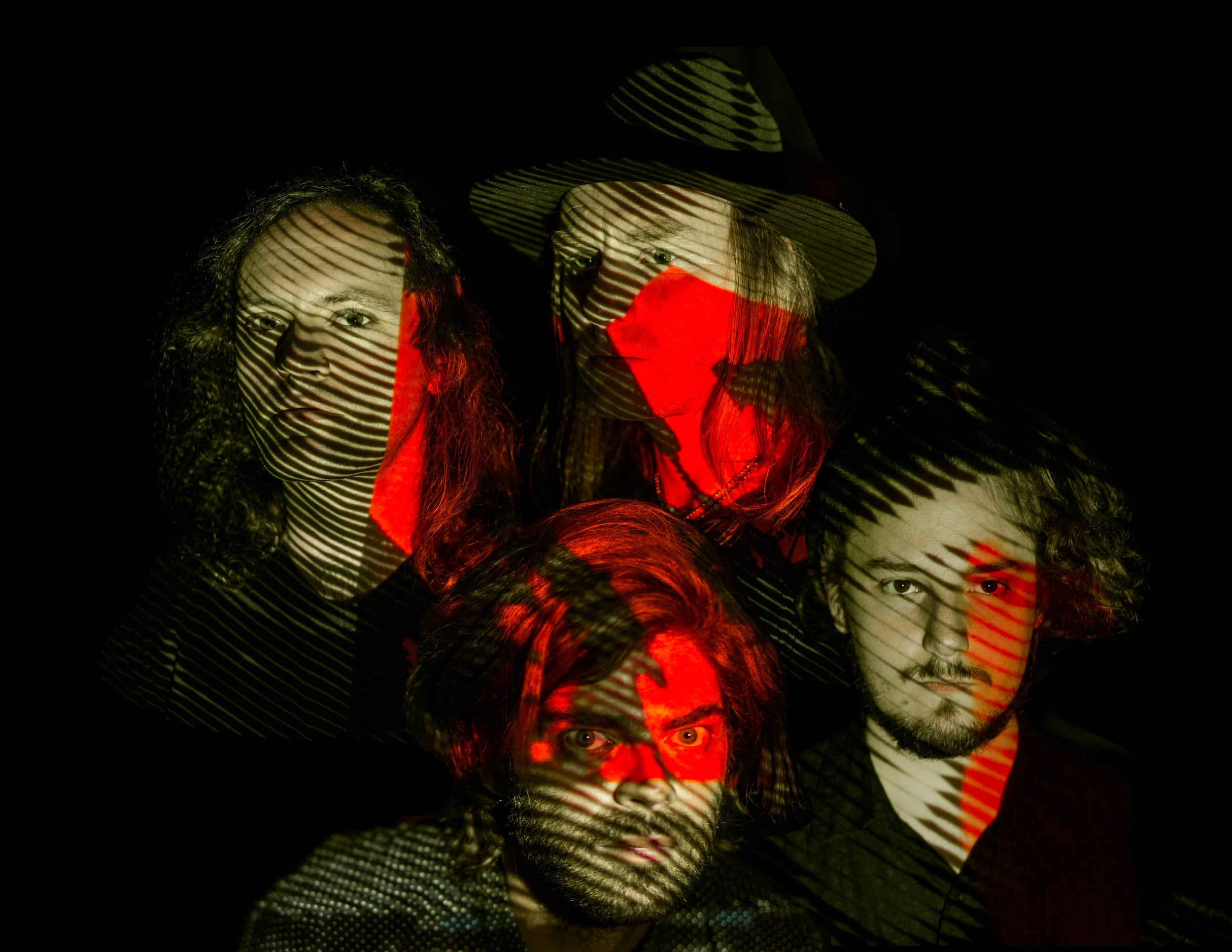
For fans of indie sleaze, or even of the term “indie sleaze,” The Faint have been keeping it alive since their debut album, Media, in 1998. From then on and through the 2000s, The Faint obliterated hardcore scene machismo and replaced it with dance-floor hysteria — fitting for an electro-punk band whose catalogue includes an album called Danse Macabre.
Best known for the fibrillated pulse and alienated air of dark dance tracks such as “Agenda Suicide,” The Faint can also pull off punk and techno-pop just as authoritatively. The 2004 track “I Disappear” sounds like an early Arctic Monkeys gem, while 1999’s “Worked Up So Sexual” could have emerged from a summit between Oingo Boingo and Of Montreal.
The intervals between albums by The Faint lengthened almost as if by design: one year between Media and 1999’s Blank-Wave Arcade; two years to 2001’s Danse Macabre; three to 2004’s Wet From Birth; four to 2008’s Fasciination. After that it officially became a hiatus, with The Faint stepping away until 2014’s Doom Abuse.
Doom Abuse is raw, aggressive and faster than previous Faint albums, a style embodied by the harsh noise and distorted bass of opening track “Help In The Head.” Another standout is the chaotic “Animal Needs,” as dizzying to listen to as it is to dance to.
2019’s Egowerk marked an emphatic return to the synthetic punk sound of Danse Macabre. From the opening seconds, the album is slick: The title track feels like entering a smoke-filled neon dungeon with blinding strobes. “Own My Eyes” would be a song to dance to at a cult ceremony, full of choral chanting and hypnotic drums. Egowerk also reflects just how much ethereal gothic sound has filtered into vocalist Todd Fink’s parallel solo DJ career.
They might hate being called “catchy” but The Faint in concert encapsulate both a punk show and a rave with hooks to yell along to. It was a good time in 1998, and The Faint’s subsequent releases have proven that it’ll be even better 28 years later.
The Faint play 7pm Friday, November 13 at Las Rosas in Miami with Violet Silhouette. thefaint.com ~ Erik Kvarnberg