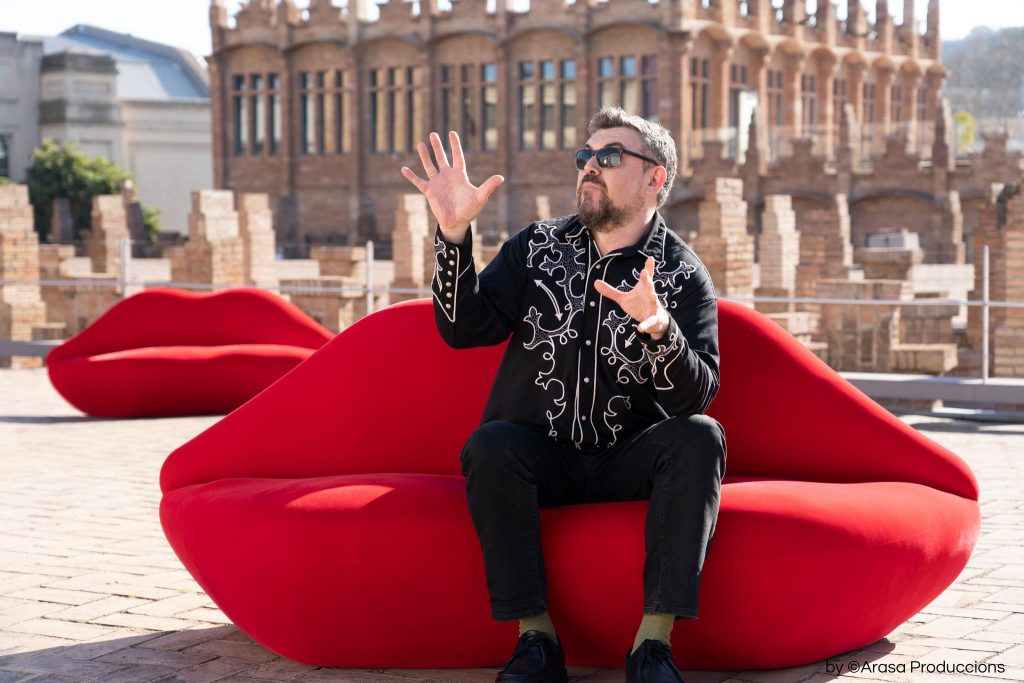
Wherever you fall on the high-low culture spectrum, the art of Sergio Mora is bound to resonate, partly because Barcelona-born Mora’s work springs from so many influences. “As a child, very different worlds coexisted naturally in my imagination,” says the PureHoney artist of the month. “I could be painting an oil canvas while watching The Munsters or Looney Tunes, surrounded by sci-fi comics, Donald Duck, and books on Diego Velázquez, Leonardo da Vinci, or Salvador Dalí. Over the years, I’ve come to understand that my work grows out of that mixture—where art and popular culture exist without hierarchy.”

In the book Nobrow: The Culture of Marketing, the Marketing of Culture, author John Seabrook wrote about the art of representing identity through culture. “Judgments of identity rather than quality … do not depend on knowledge of the canon, tradition, history, or some shared set-up standards about what constitutes ‘good taste’ to give them weight.” Instead, Seabrook wrote, the art you gravitate to creates a “small relationship economy … around culture products …as a source of status.”
Landing squarely on “nobrow” — outside of traditional elitist tastes or common-denominator commercial products — Mora roams across and between canons to create a visual world with a variety of entry points, subverting traditional boundaries of class and schooling, and upending hierarchies that place old-world masters multiple rungs above contemporary street artists.
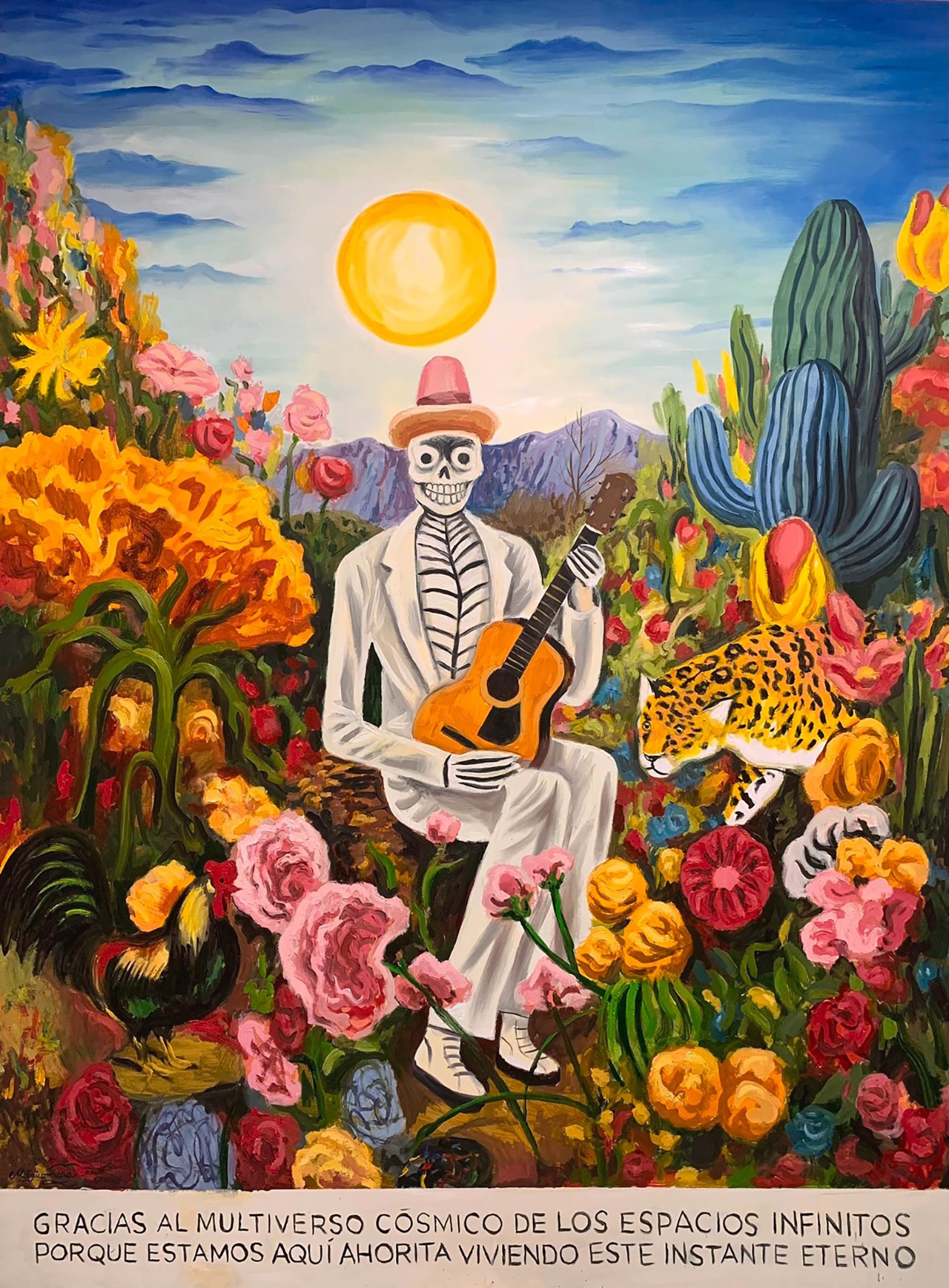
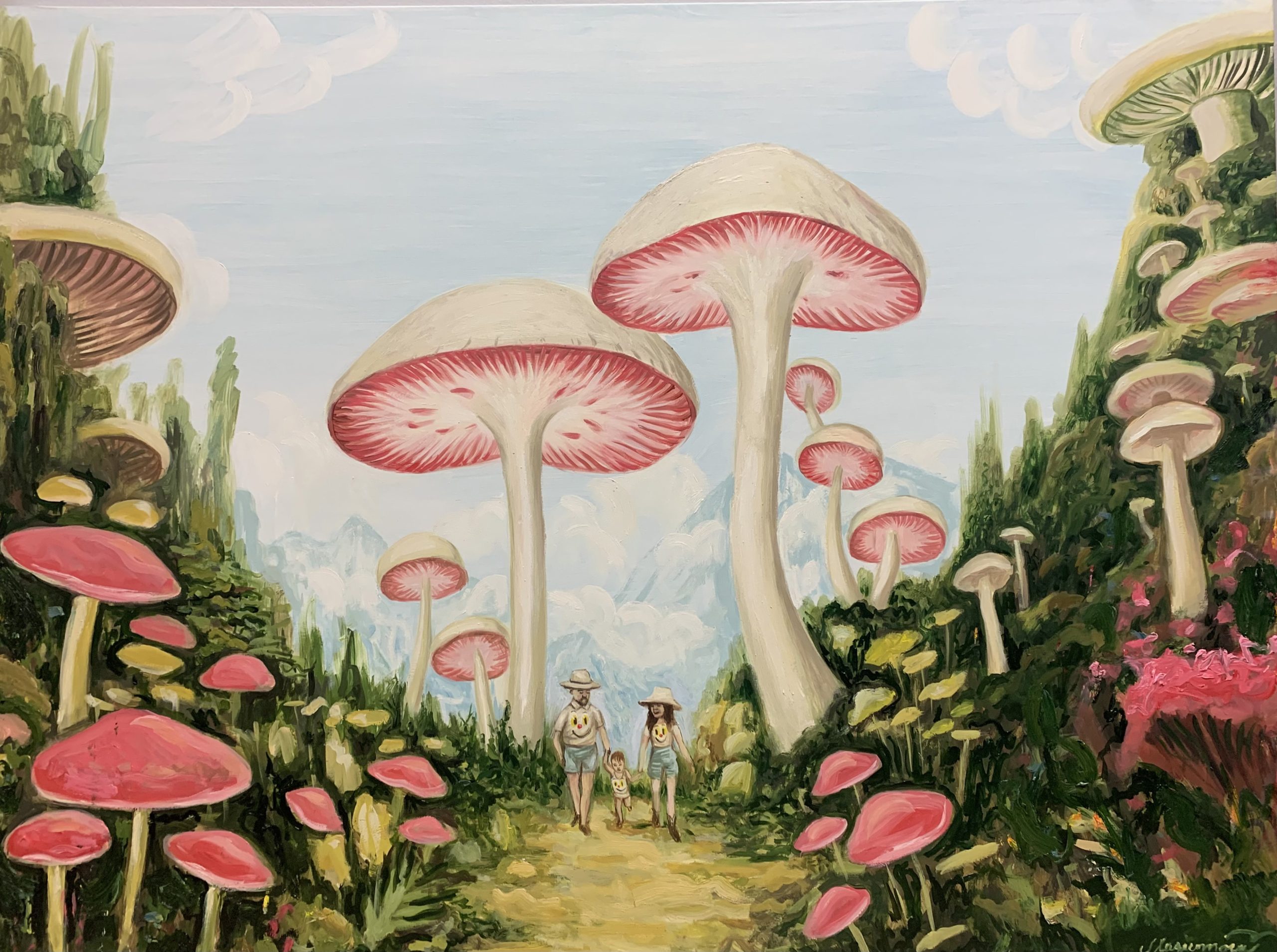
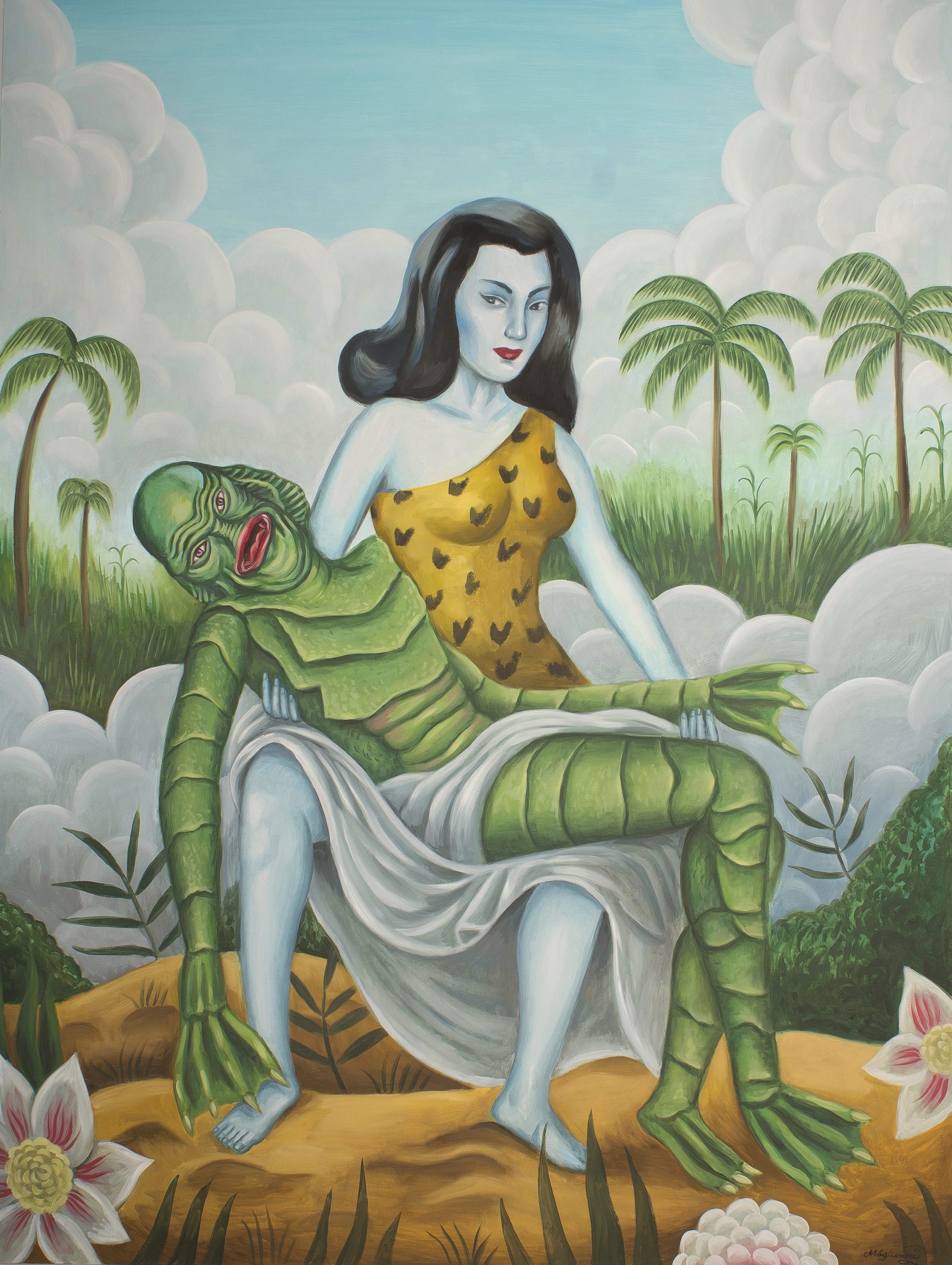
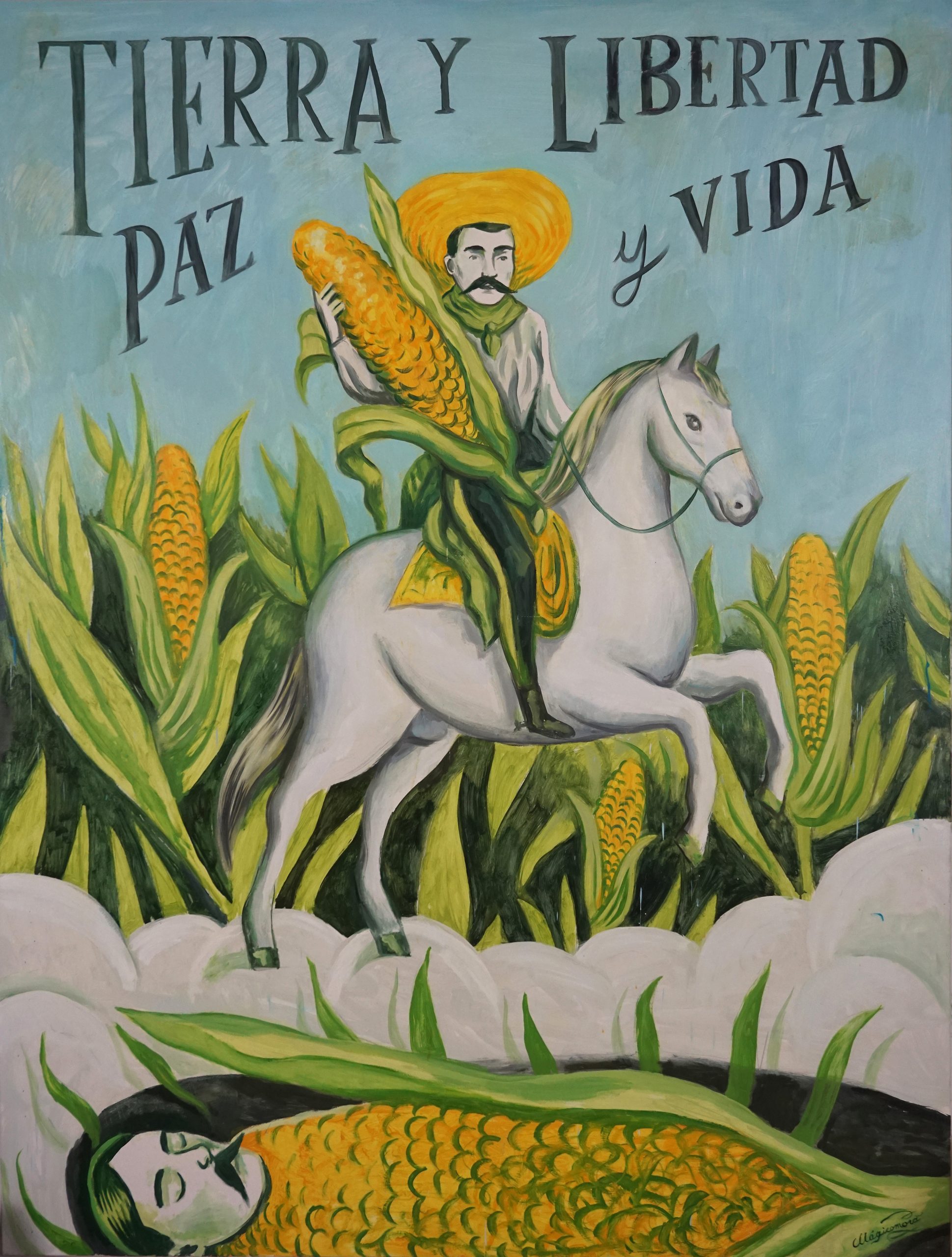
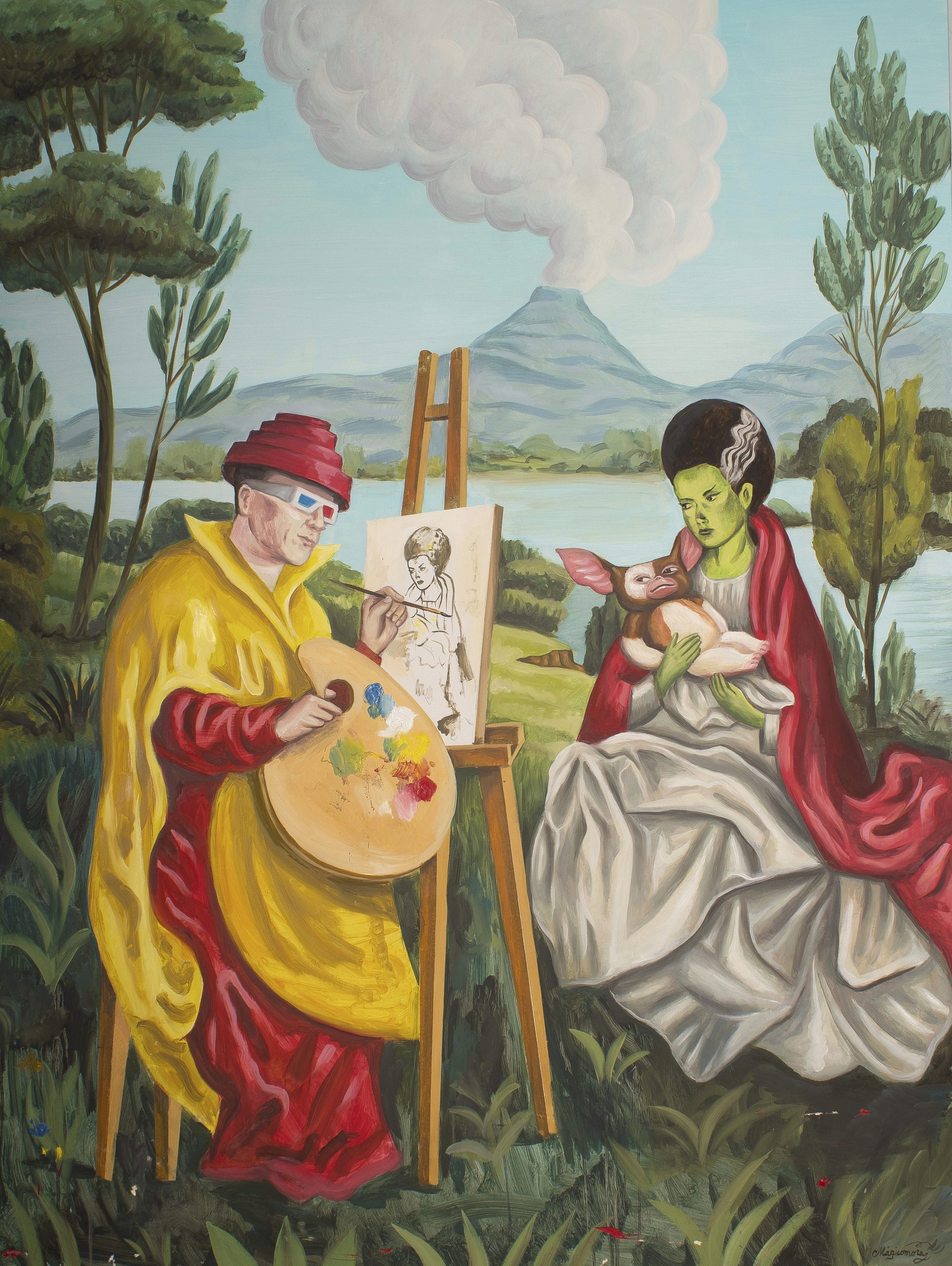
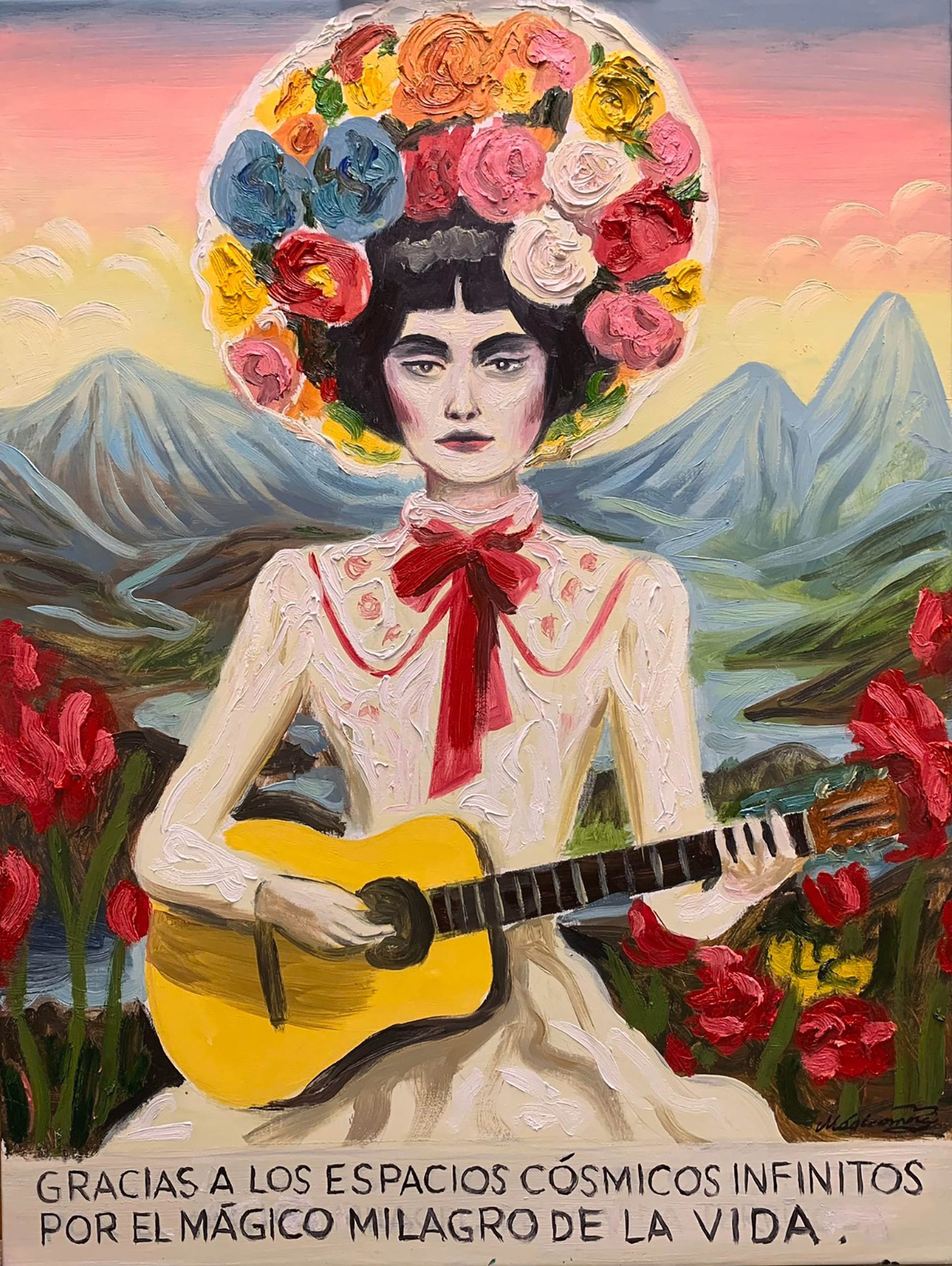
Mora says he is not “narrating my story” in his paintings, illustrations and graphic novels: “I’m building an ecosystem where that story has dissolved.” There are references to religion, such as Jesus playing drums with a “God Loves You” band logo stenciled across the kick drum. Or there’s Milicent Patrick, a real-life Hollywood pioneer who features in Mora’s graphic novel, La chica de Serie B.
Patrick — Disney animator, actress, and makeup effects designer who created the iconic visage of the Creature From The Black Lagoon — was mistreated by the industry in her day and long overlooked by Hollywood historians. Yet here she is in Mora’s comic book roman à clef, her life the subject of a movie being filmed by one Simón Sagal, a fictional Spanish film director who’s had a surprise hit with his debut feature and is struggling to follow it up. Paralyzed by self-doubt, Sagal descends into drug abuse, an illicit affair and other noir-themed pitfalls. Trading in cultural references, high and low, Mora creates a captivating visual world that can strike a chord with art scholars and taggers alike.
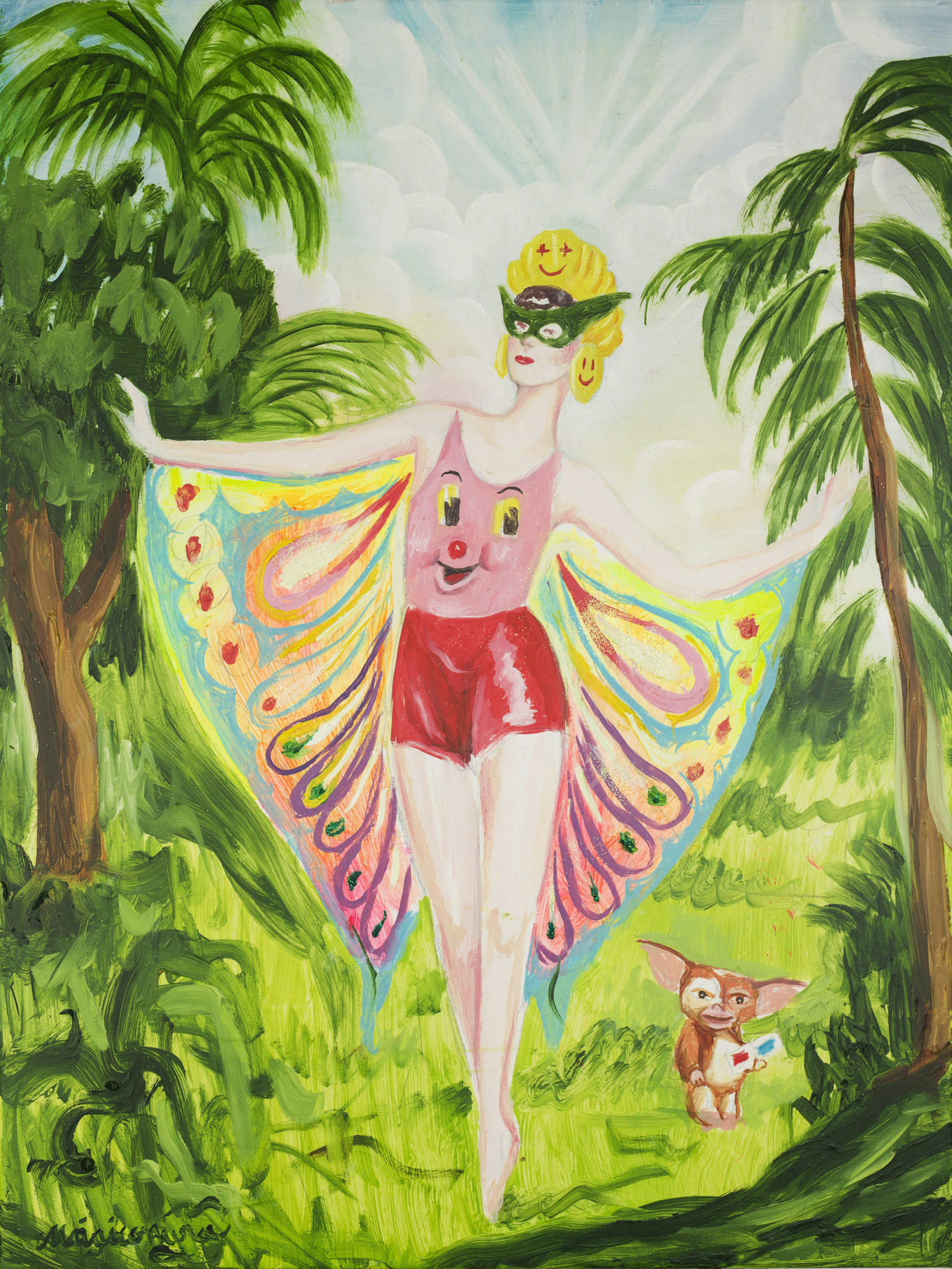
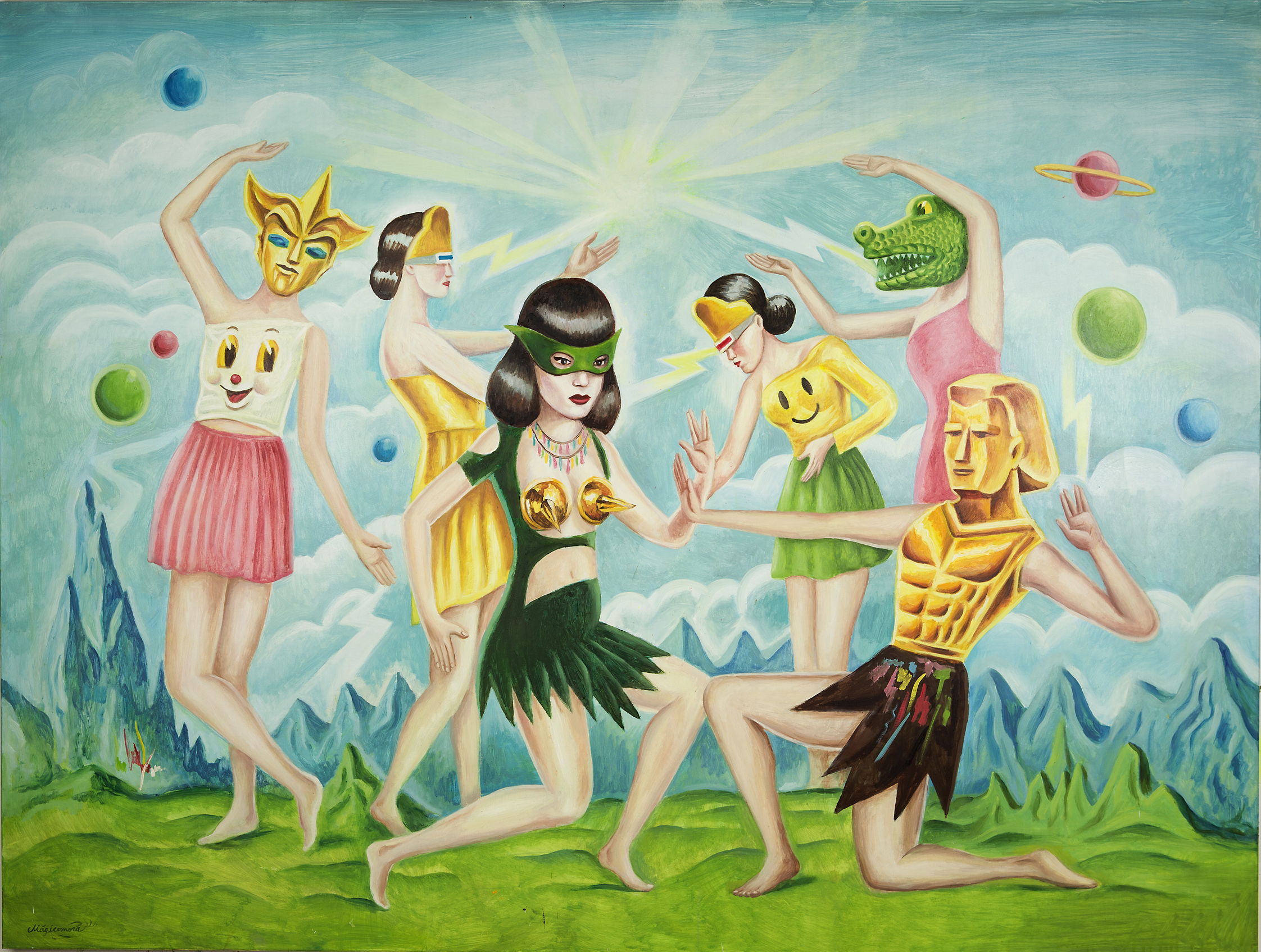
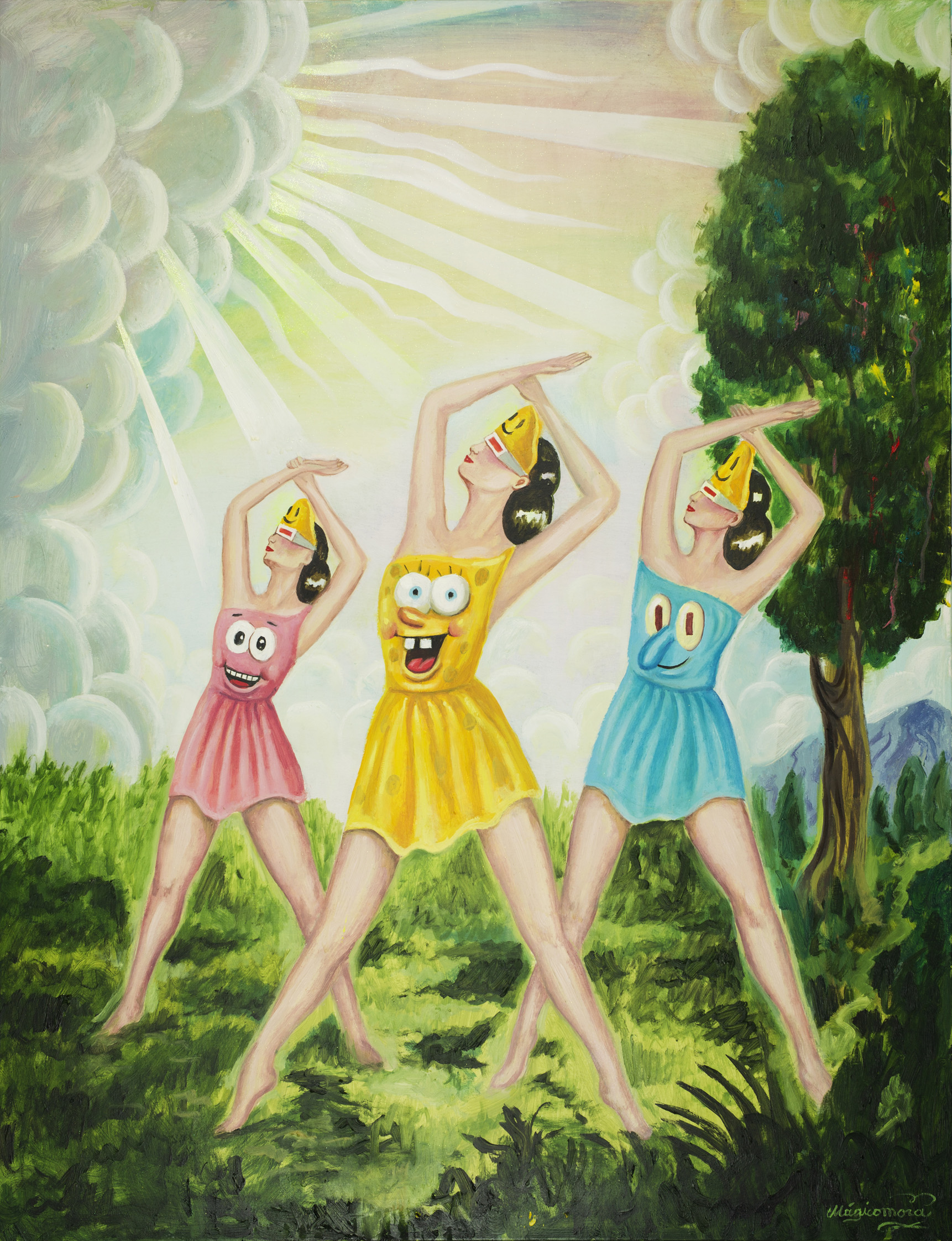
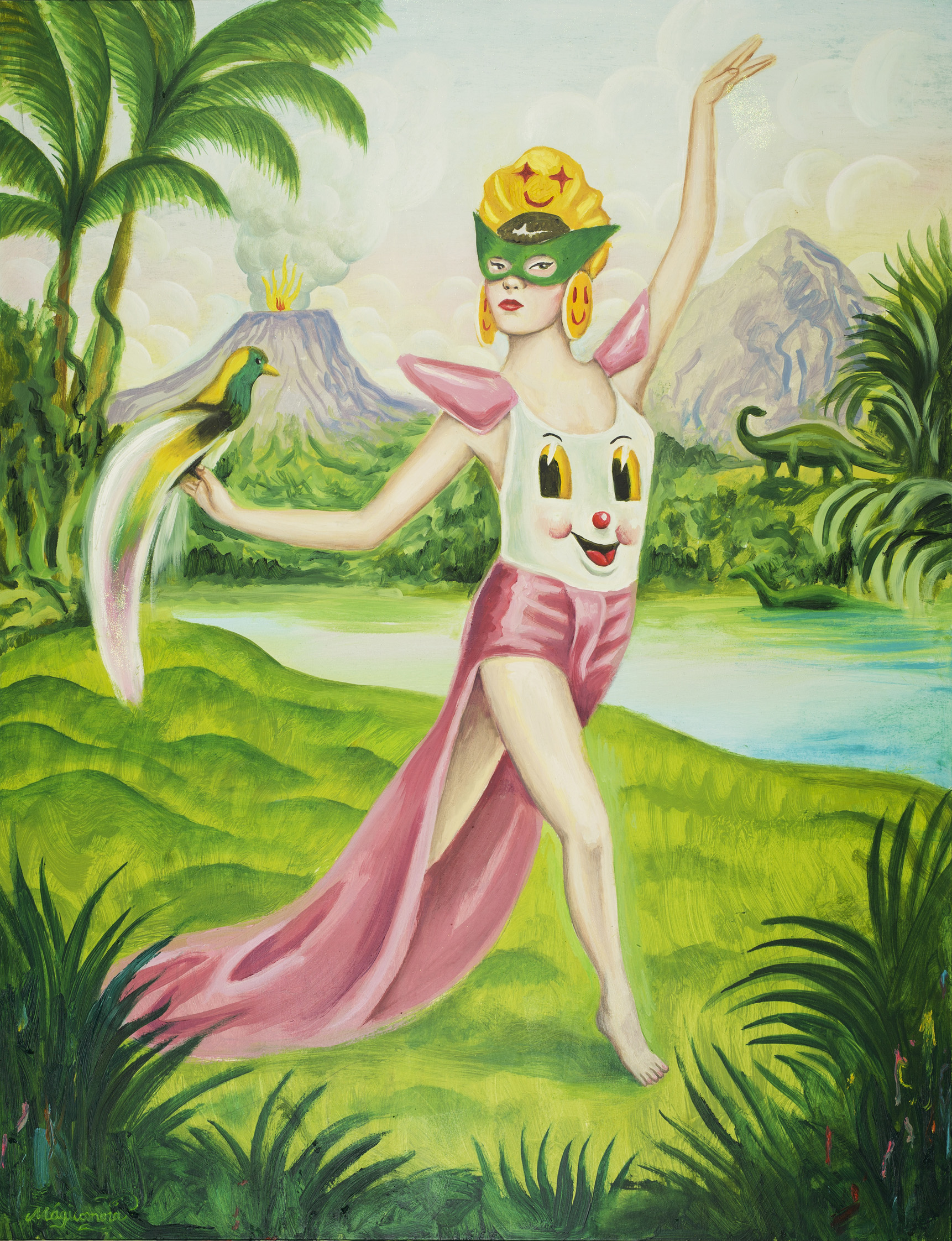
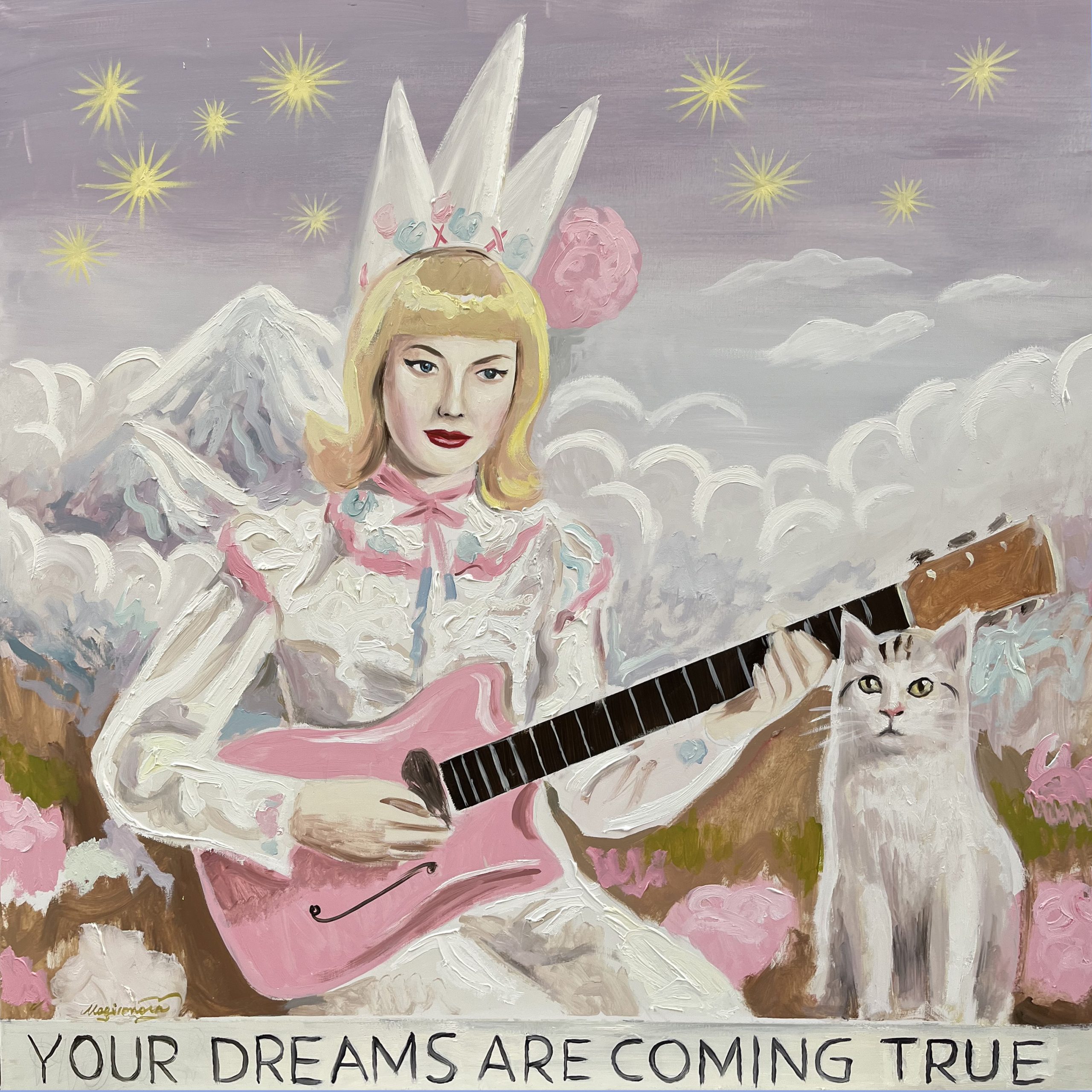
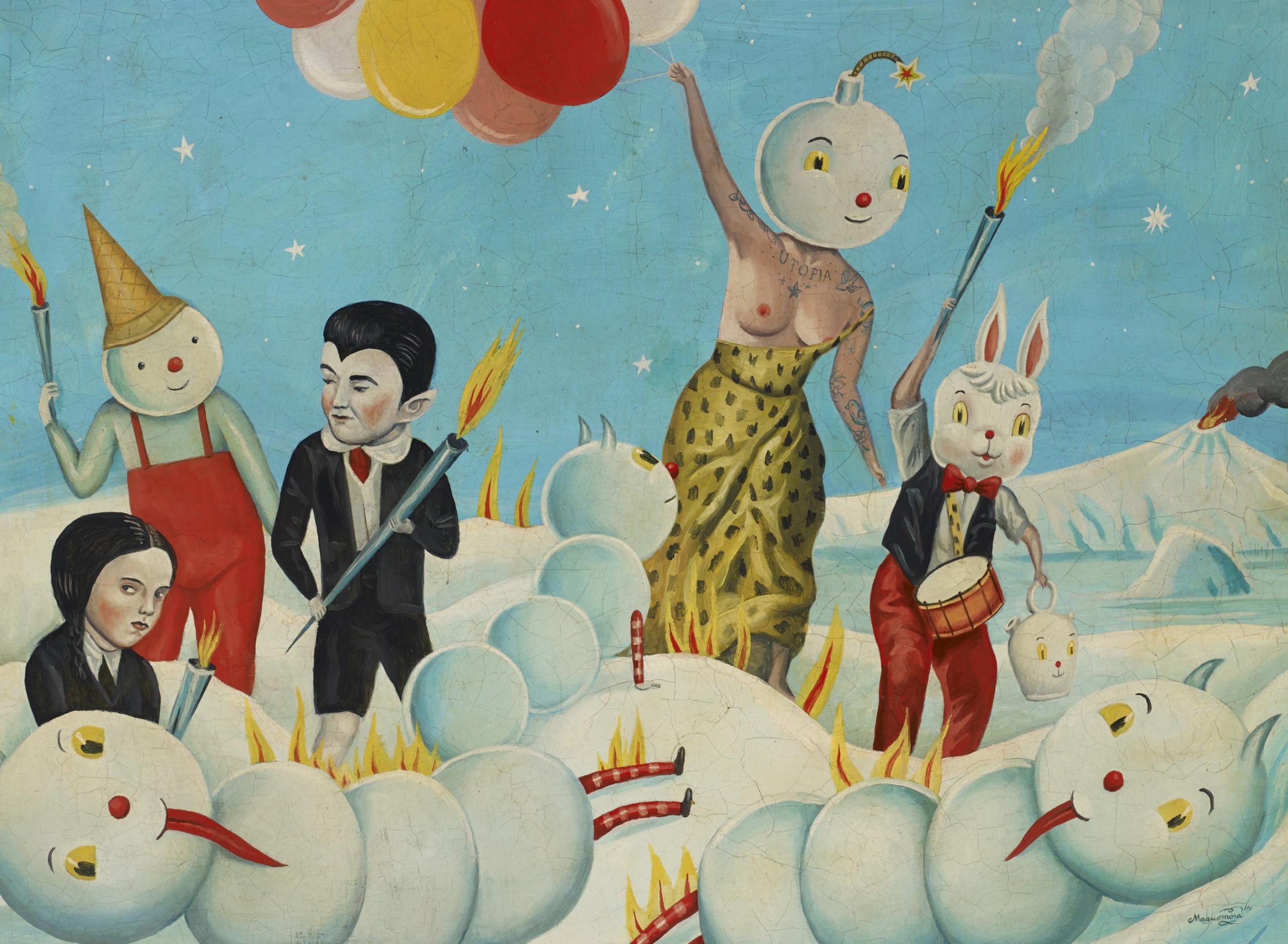
The common denominator in this eclectic universe is Mora. Adamant though he is that he’s not retelling his own life story, he does allow that he mines it for “emotional material.” As he explains, “There’s an intention to sustain multiple layers at once: narrative, symbolic, and philosophical, I’m interested in the reader not only following a story but entering a particular mental state.”
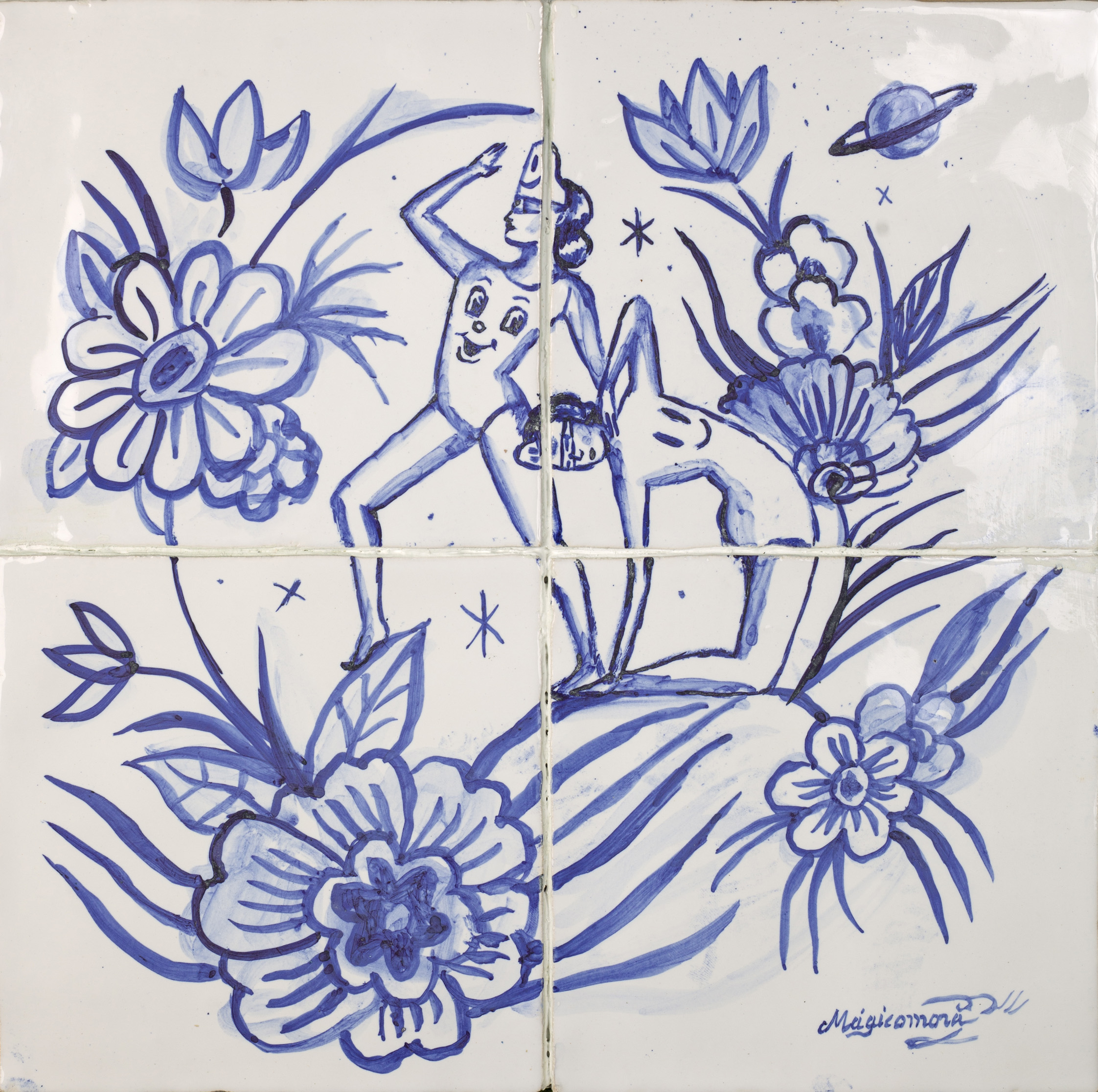
The mental state suggested by Mora’s candy-colored worlds filled with anachronistic characters — dinosaurs prowling a tropical landscape behind a woman dancing the hula in the foreground, for example — is one of play. Mora says that playfulness “destabilizes certainty,” adding, “When something makes you smile, your guard drops, and in that moment deeper readings can emerge. I’m interested in characters that don’t fully belong to a specific moment.”
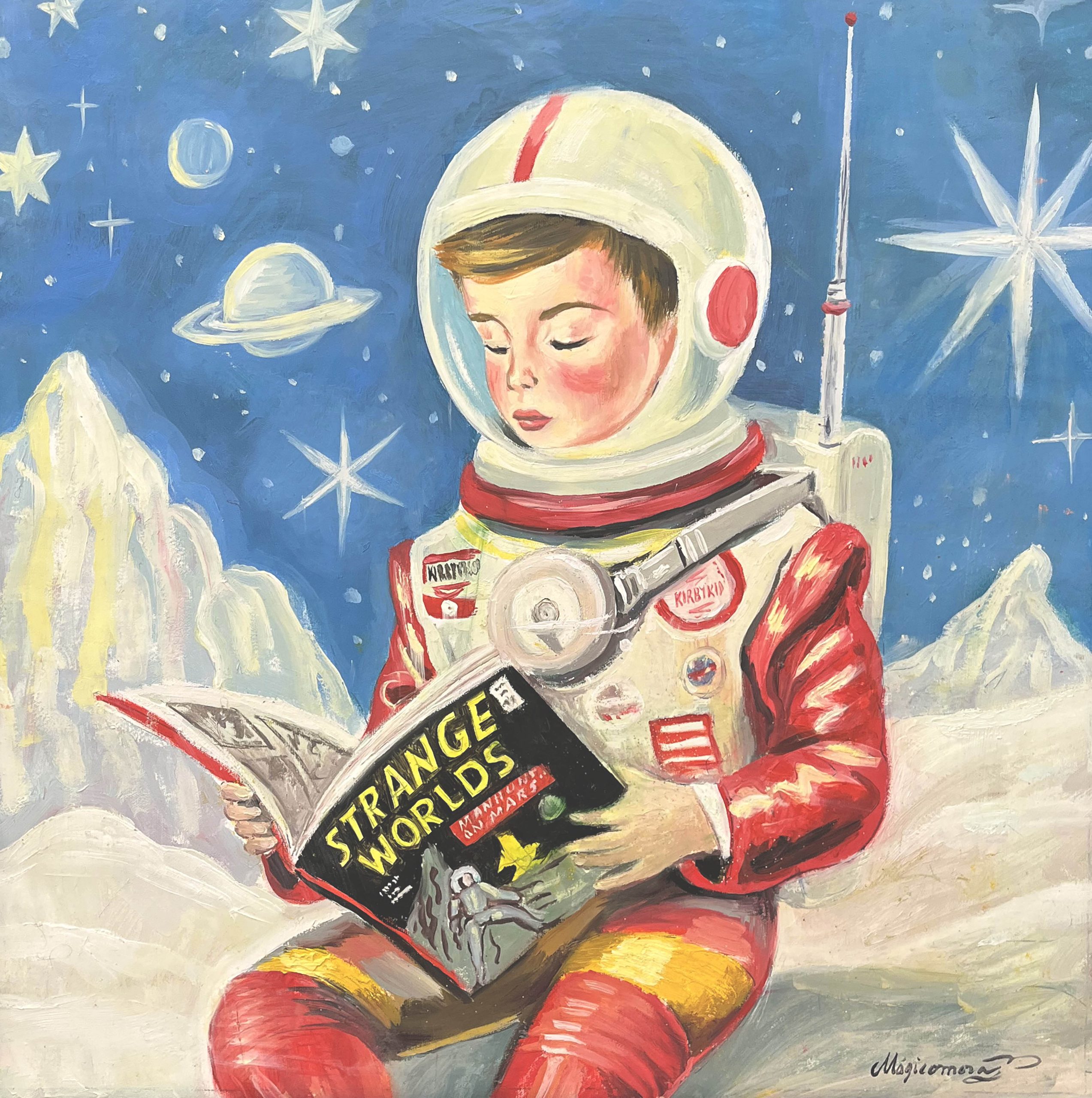

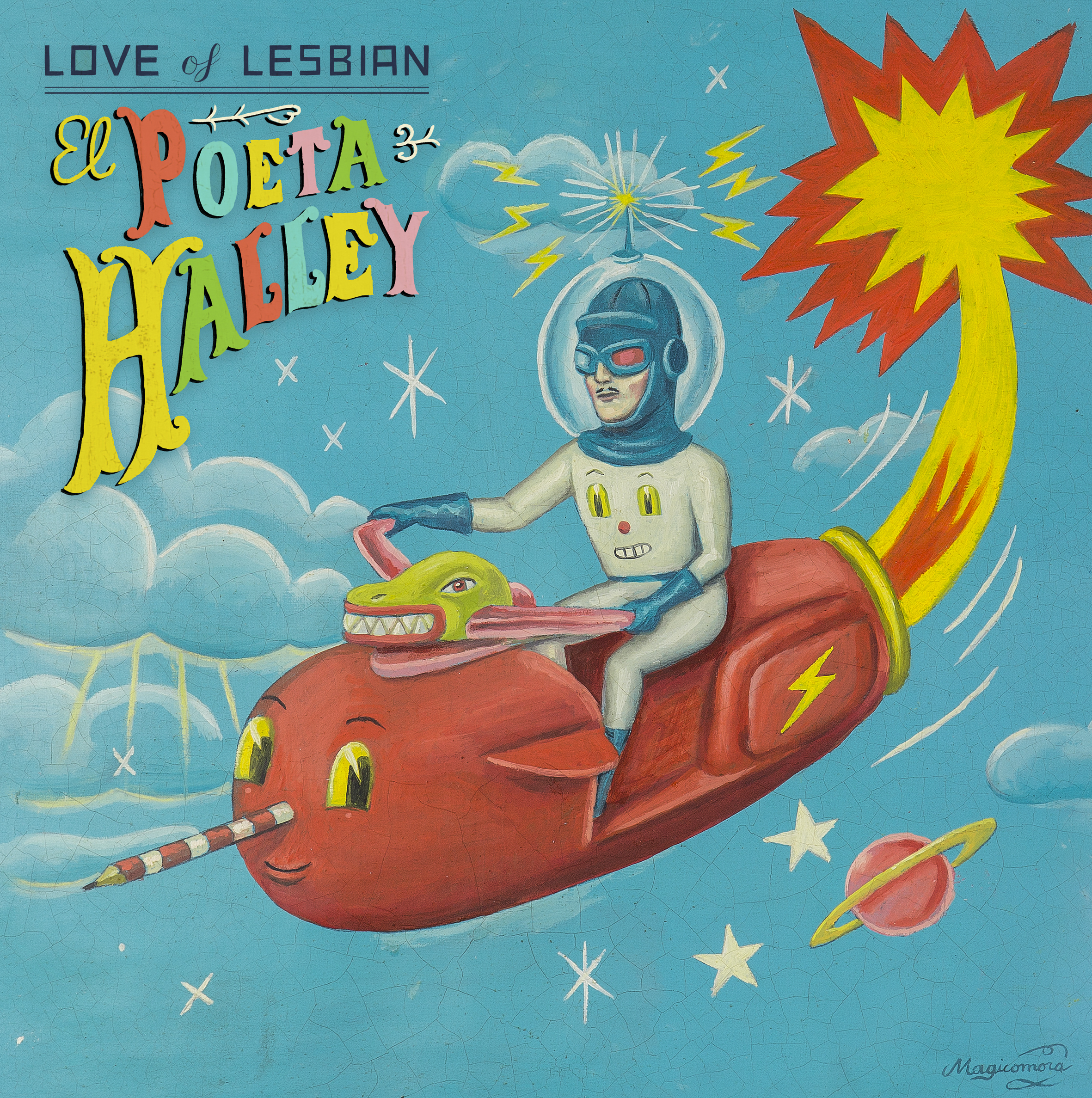
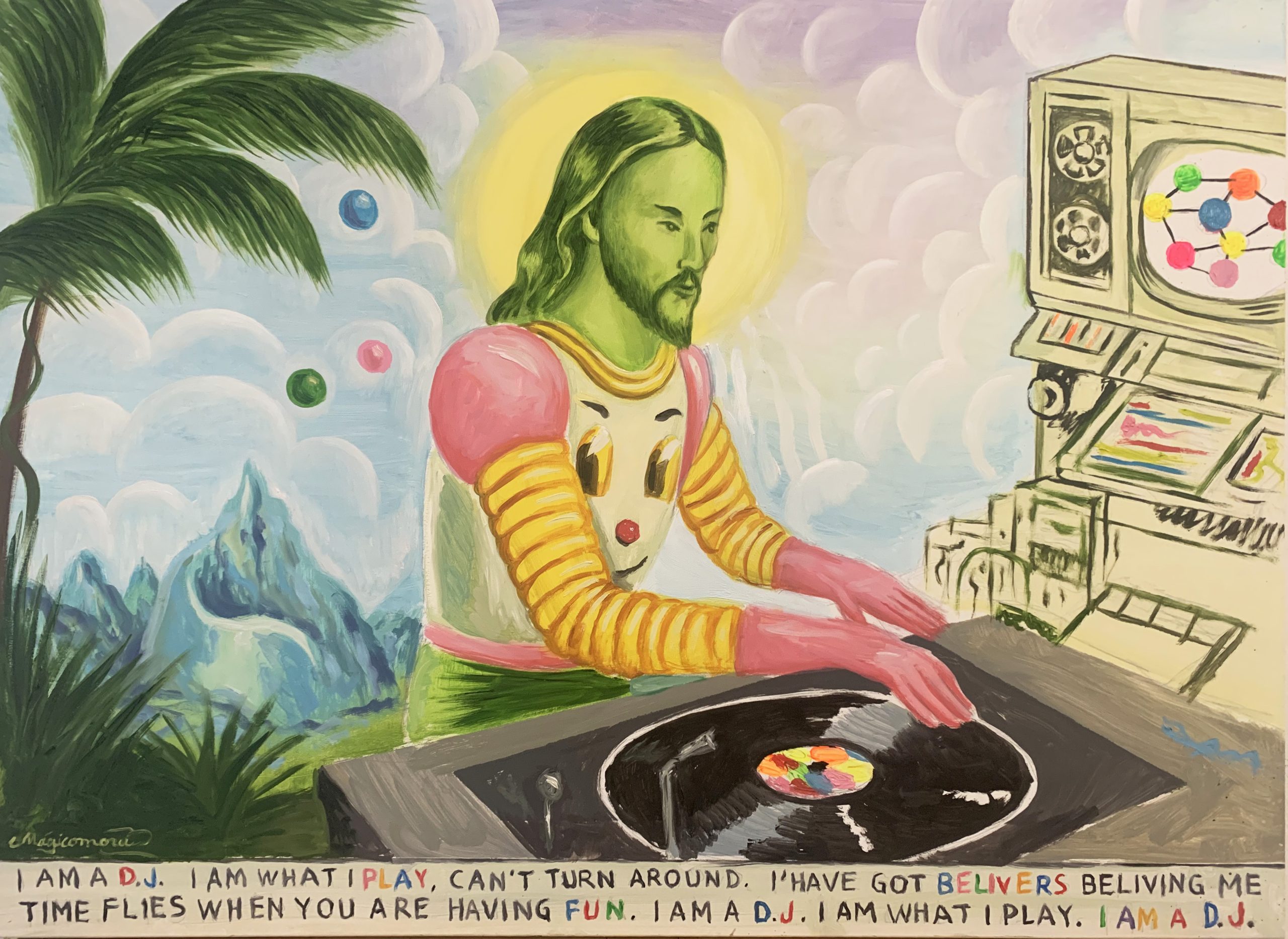
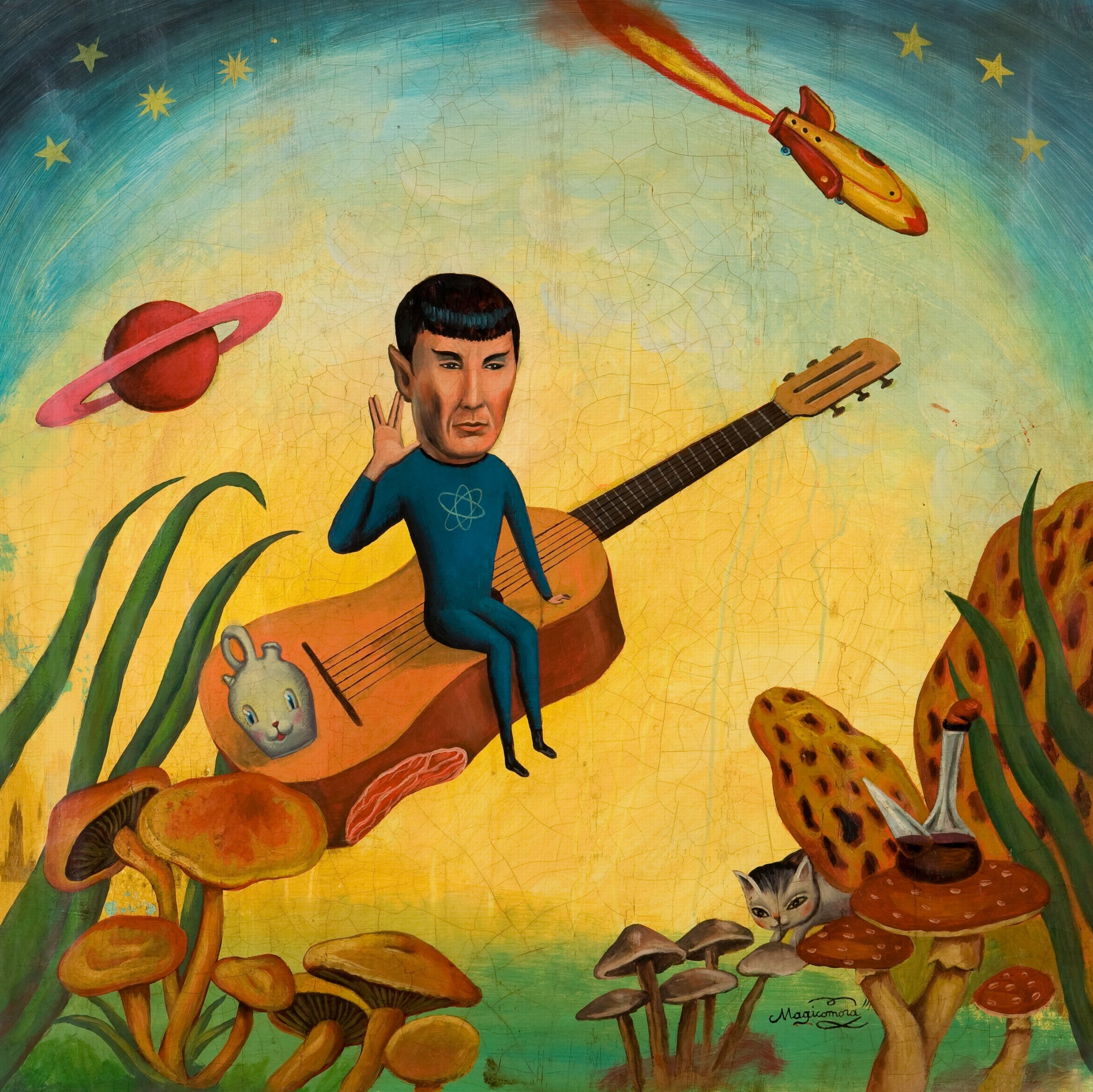
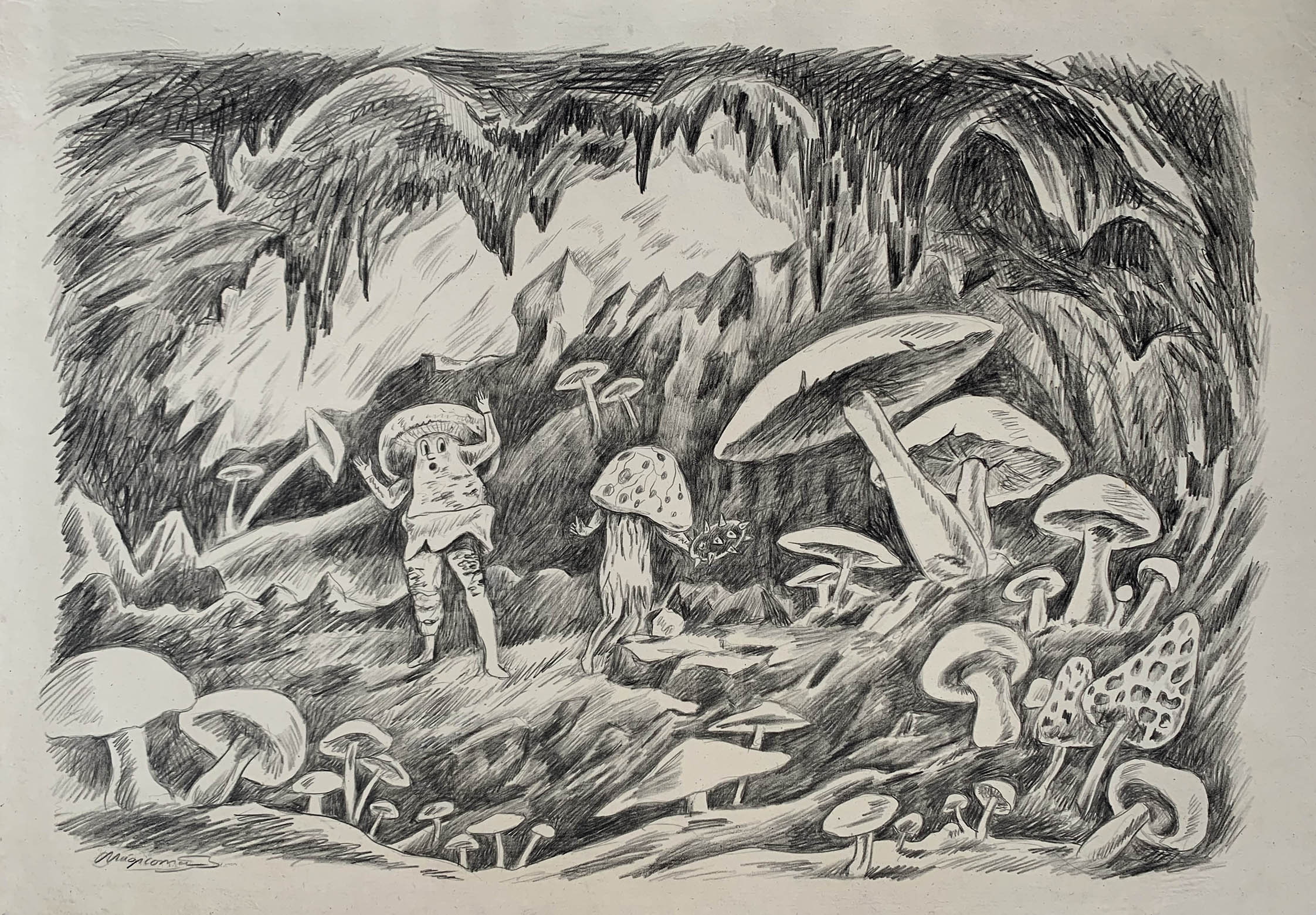
“There’s a strong visual tradition in Spain where the religious, the popular, folklore, and the baroque coexist — and all of that leaves a trace, even when it’s not consciously addressed,” Mora says. “But rather than thinking of identity as something fixed, I see it as something in motion — more like a system of relationships. My work is built from that perspective: bringing together elements that don’t seem to belong together — folklore, pop culture, science fiction, humor — and allowing them to coexist.”
“We live in a moment where everything is increasingly segmented,” he continues, “defined by categories and target audiences. I’m interested in doing the opposite: crossing those boundaries, contaminating languages.”
Although based in Spain, Mora is known internationally. You can see his work up close starting in October if you can make it to Mortal Machine Gallery. in New Orleans.
Find Sergio Mora at instagram.com/sergio.mora.art and at sergiomora.com. ~ Kelli Bodle